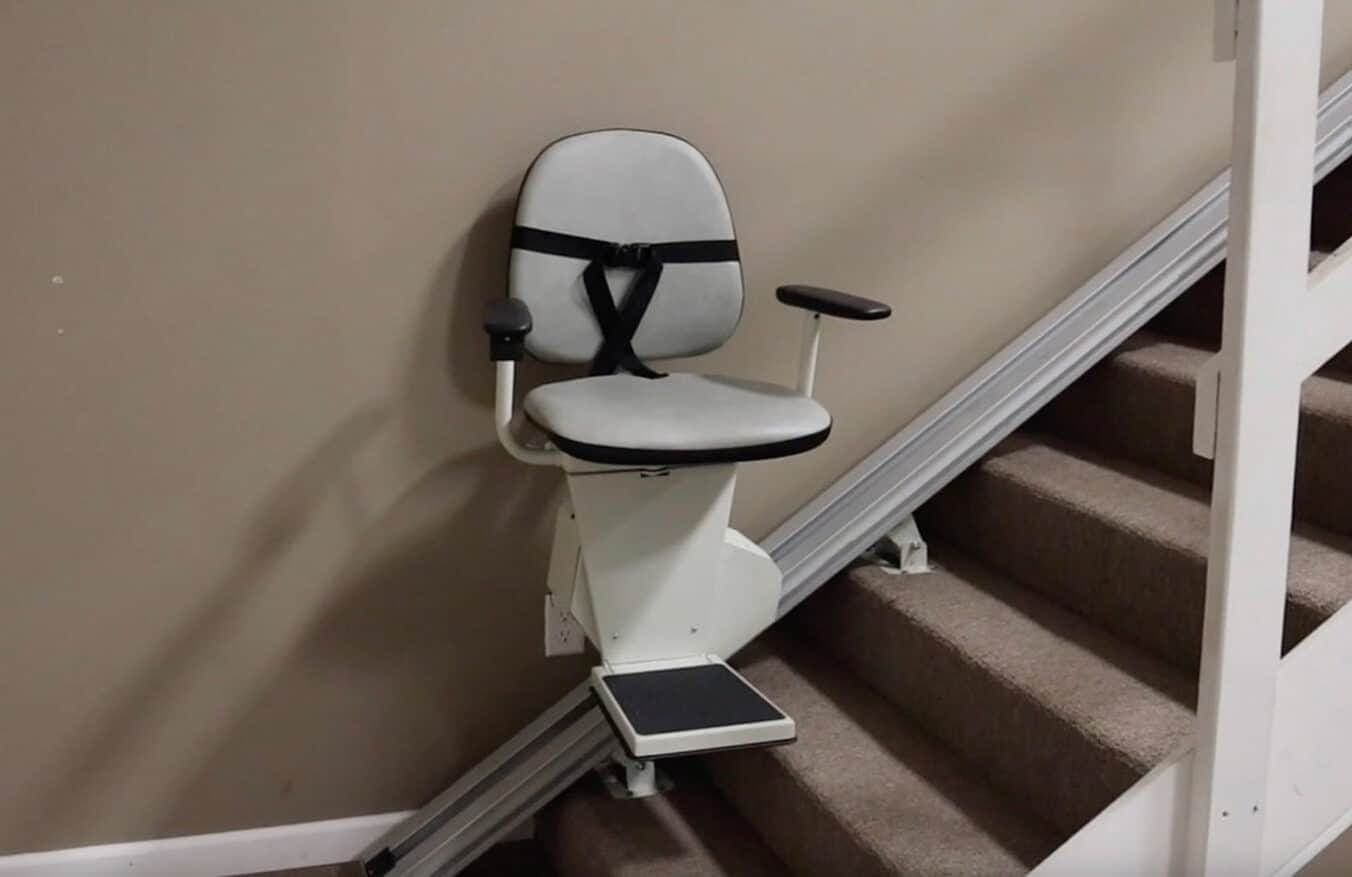
If the stairs in your home are getting harder to manage, you've probably come across the term stair lift. Here's a plain-English look at what a stair lift is, how it works and whether it might be right for you.
What is a stair lift?
A stair lift is a motorized chair that carries a person up and down a staircase. The chair rides along a rail that runs the length of the stairs. You sit down, fasten the seat belt, press a control and the chair moves smoothly to the other floor.
You'll also hear stair lifts called stair chairs, chair lifts, stairlifts and stair chair lifts. They all describe the same kind of equipment. (We cover the naming in more detail in stair chair vs. stair lift.)
How does a stair lift work?
Most residential stair lifts have four main parts:
- The rail: a track attached to the stair treads, not the wall, that guides the chair
- The carriage and motor: the unit that moves the chair along the rail
- The seat: a padded chair with armrests, a seat belt and a footrest
- The controls: usually a control on the armrest, plus call-and-send remotes at the top and bottom of the stairs
When no one is using it, the seat, armrests and footrest typically fold up so the stairs stay usable for everyone else in the home.
Who is a stair lift for?
A stair lift helps anyone who finds stairs tiring, painful or unsafe but can sit and stand with little or no help. That includes:
- Older adults who want to keep using every floor of their home
- People recovering from surgery or managing arthritis, heart or lung conditions
- Anyone with balance concerns who worries about falling on the stairs
- Families planning ahead so a parent can stay in the home longer
The main types of stair lifts
The shape of your staircase decides the type:
- Straight stair lifts are for staircases that run in one straight line with no landing or turn. They're usually the simpler installation.
- Curved stair lifts are for staircases that turn, have a landing or change direction. The rail is made to follow your stairs.
- Outdoor stair lifts are built to handle the weather on porch, deck or walkway steps.
Stair lift FAQs
Does a stair lift damage the stairs or walls?
On most residential stair lifts, the rail attaches to the stair treads rather than the wall, so the walls are usually untouched. Your installer will explain exactly how the rail attaches to your stairs.
Does a stair lift work during a power outage?
Many modern stair lifts run on rechargeable batteries that charge while the chair is parked, so they can keep working during a power outage. Ask about battery backup on the model you're considering.
Can other people still use the stairs?
Yes. When it's not in use, the seat, armrests and footrest fold up so the stairs stay open for everyone else in the house.
How long does it take to get a stair lift?
It depends on your staircase. Straight stair lifts are generally quicker to arrange and install. Curved stair lifts take longer because the rail is made to fit your stairs.
Is a stair lift right for your home?
A stair lift is often the most practical way to make a multi-level home easier to live in. It's installed on your existing staircase, doesn't require remodeling and lets you keep the bedroom, bathroom and laundry room you already have.
The best next step is a conversation about your stairs. Contact Tri-State Stair Chair and tell us a little about your staircase, and we'll explain which kind of stair lift fits.